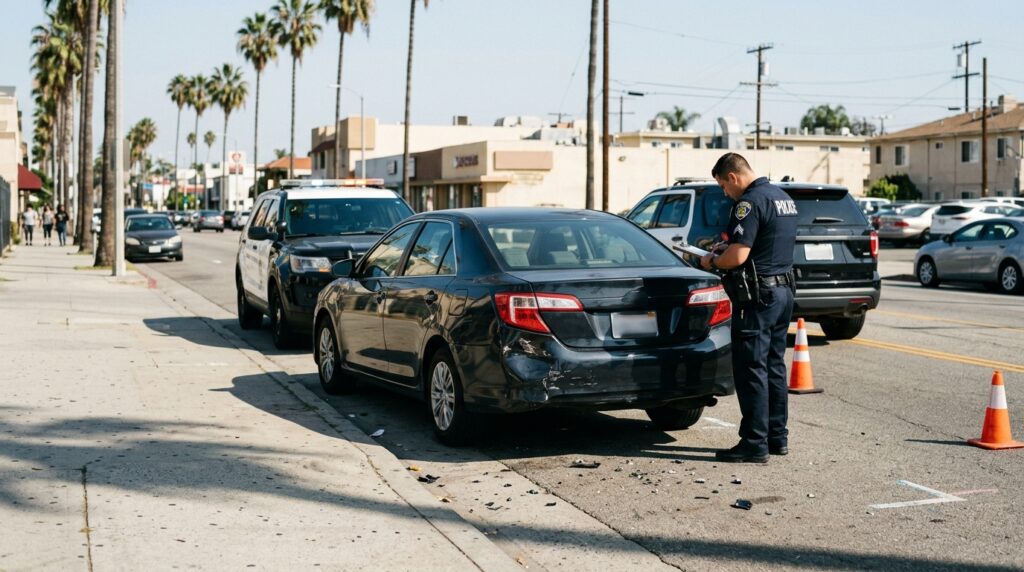
Fortunately, California insurance law may provide recovery options even when investigators cannot identify the driver. Uninsured motorist coverage, medical payments coverage, and other applicable policies can become important after a collision.
However, hit-and-run claims involve specific reporting requirements, evidence standards, and legal deadlines. Missing an important requirement may create a coverage dispute.
This 2026 guide explains how uninsured motorist insurance works, what victims should do after an accident, and which damages may be recoverable.
California Hit-and-Run Injury Claims and Insurance Coverage in 2026
A hit-and-run generally occurs when a driver leaves an accident scene without fulfilling legally required duties. California Vehicle Code Section 20001 addresses collisions involving injury or death, while Section 20002 concerns property-damage accidents.
Importantly, leaving the scene is a separate legal issue from causing the collision. Investigators must examine both the driver’s conduct after the crash and the evidence establishing fault.
When the responsible driver remains unidentified, ordinary third-party liability claims become difficult. Consequently, injured people often review their own automobile insurance policies.
How Uninsured Motorist Coverage Works After a Hit-and-Run
California Insurance Code Section 11580.2 establishes important rules governing uninsured and underinsured motorist coverage.
Insurance companies generally must offer uninsured motorist protection when selling automobile liability insurance. Policyholders may reject that coverage through a legally compliant written waiver.
Therefore, not every California driver automatically has available uninsured motorist benefits.
Understanding Bodily Injury and Property Damage Protection
Uninsured motorist bodily injury coverage, commonly abbreviated UMBI, may pay covered damages when an uninsured driver negligently causes injuries.
In qualifying hit-and-run cases, California law can treat an unidentified driver as uninsured. However, additional statutory requirements apply.
Potentially covered losses include medical expenses, lost income, and other legally recoverable bodily injury damages, subject to policy limits.
Uninsured motorist property damage coverage operates differently. California’s standard UMPD coverage generally requires identification of the uninsured driver and has a $3,500 limit.
Consequently, someone whose vehicle was damaged by an unidentified driver should not assume that UMPD will pay for repairs.
Collision coverage may provide another option, although deductibles and policy conditions can apply.
The California Department of Insurance automobile insurance guide explains the differences between liability, uninsured motorist, medical payments, and collision coverage.
Physical Contact and Hit-and-Run Reporting Requirements
California imposes special requirements on certain uninsured motorist bodily injury claims involving unidentified vehicles.
One important requirement is actual physical contact between the unidentified vehicle and the insured person or vehicle.
For example, an unidentified driver who strikes another car and immediately disappears may create a qualifying claim if the remaining requirements are satisfied.
However, a driver who swerves to avoid an unidentified vehicle and crashes without contact may encounter a significant UM coverage obstacle.
The statute also contains specific reporting requirements, including reporting the accident to police within 24 hours and filing a sworn statement with the insurer within 30 days in qualifying unidentified-driver claims.
These statutory rules should be reviewed carefully because policy conditions and individual circumstances can create additional issues.
Anyone injured in a hit-and-run should report the incident promptly rather than relying on a general insurance notification schedule.
What If the Driver Is Later Identified?
Sometimes investigators locate a fleeing driver through surveillance footage, eyewitnesses, license plate information, or vehicle damage evidence.
When that happens, the injured person may have an opportunity to pursue a liability claim against the responsible driver.
Nevertheless, identifying the driver does not guarantee available insurance or sufficient funds to compensate every loss.
The driver may have no valid insurance, limited coverage, or a disputed policy.
Therefore, claimants should continue preserving evidence and communicating with their insurers while investigations proceed.
California’s 30/60/15 Minimum Insurance Limits
California’s standard minimum automobile liability coverage increased on January 1, 2025. The updated requirements remain relevant in 2026.
- $30,000: Bodily injury or death coverage per person.
- $60,000: Total bodily injury or death coverage per accident.
- $15,000: Property damage liability coverage per accident.
These minimums establish required liability protection, not guaranteed settlement payments.
For instance, a victim may experience $70,000 in medical expenses and other losses after a collision involving a minimally insured driver.
The responsible driver’s liability coverage may fall short of those damages.
Underinsured motorist coverage could become relevant if the claimant purchased qualifying protection and meets applicable legal requirements.
However, coverage calculations and offsets depend on California law and the particular insurance contract.
Other Parties Who Could Share Responsibility
Although many hit-and-run crashes involve a single fleeing driver, some accidents include additional responsible parties.
For example, a second motorist might contribute to a multivehicle collision through an unsafe maneuver.
In certain circumstances, an employer could also face responsibility for an employee’s negligent conduct while performing job duties.
However, liability does not arise merely because another person or business was connected to the situation.
Investigators must establish legally relevant conduct, causation, and damages before pursuing additional claims.
For a broader overview, read our complete guide to car accident injury claims, which explains evidence, settlement considerations, and liability disputes.
How to Protect Your California Hit-and-Run Injury Claim
Evidence preservation is particularly important when the responsible driver cannot be identified immediately.
Photographs, witness statements, digital recordings, and medical documentation may help establish the collision circumstances and resulting injuries.
Taking organized steps can also reduce confusion when multiple insurance policies or claims representatives become involved.
Evidence, Compensation, and Legal Deadlines After an Accident
First, move to a safe location when possible. Call emergency services if anyone needs urgent medical assistance.
Second, report the hit-and-run to law enforcement promptly. Provide accurate details about the fleeing vehicle without inventing information that you did not observe.
Third, seek medical evaluation when injuries are suspected. Some symptoms become noticeable only after the initial shock of a collision.
Fourth, preserve photographs showing vehicle damage, roadway conditions, debris, and visible injuries.
Finally, notify the appropriate insurance company and review your coverage documents.
Which evidence can strengthen an injury claim?
Useful records may include:
- Police reports and accident reference numbers.
- Photographs of vehicle damage and the crash scene.
- Witness names and contact information.
- Available dashcam and surveillance recordings.
- Medical diagnoses and treatment records.
- Repair estimates, invoices, and lost wage documentation.
Digital recordings can help identify a fleeing vehicle or demonstrate how the collision occurred.
However, video evidence should be reviewed for timestamps, recording quality, and possible editing.
Social media content can also affect personal injury disputes. Our article about social media and personal injury cases explains why online activity may become relevant evidence.

What compensation may be available?
California personal injury claims can involve economic and noneconomic damages when supported by evidence.
Economic damages may include medical bills, rehabilitation expenses, future treatment costs, lost earnings, and reduced earning capacity.
Noneconomic damages may address physical pain, emotional distress, and loss of enjoyment of life.
Nevertheless, compensation depends on liability, causation, the extent of injuries, and applicable insurance terms.
A serious injury does not automatically produce a particular settlement amount.
Likewise, an insurance policy limit does not necessarily establish the full legal value of a person’s damages.
Can the insurance company deny a hit-and-run claim?
Yes. Insurers may dispute coverage, liability, physical contact, reporting compliance, or whether the claimed injuries resulted from the collision.
However, a denial is not automatically correct.
Claimants can request the insurer’s explanation and review the relevant policy provisions.
When disagreements continue, an attorney experienced in California insurance disputes may help evaluate available remedies.
What filing deadlines apply in California?
California Code of Civil Procedure Section 335.1 generally provides two years to file many personal injury lawsuits.
However, special rules govern uninsured motorist claims, including procedures for preserving arbitration rights and complying with Insurance Code Section 11580.2.
Therefore, the ordinary personal injury filing period should not be treated as the only relevant deadline.
Claims involving public entities may have additional requirements, including administrative claim deadlines that can be substantially shorter.
Insurance negotiations do not necessarily extend these deadlines.
Frequently asked questions
Can I recover compensation if the hit-and-run driver is never found?
Potentially. Qualifying uninsured motorist coverage and other applicable policies may provide compensation even when the driver remains unidentified.
Does uninsured motorist coverage automatically include every driver?
No. California insurers generally must offer the coverage, but policyholders can reject it through a valid written waiver.
Does a hit-and-run always require physical contact for UM coverage?
California’s special unknown-vehicle UMBI provisions generally require actual physical contact. Other insurance coverages and factual circumstances require separate analysis.
Can I claim pain and suffering?
Potentially. Noneconomic damages may be recoverable when the legal requirements and applicable coverage support the claim.
Should I accept the first insurance settlement offer?
Before accepting, consider the available medical evidence, future treatment needs, outstanding losses, and the legal effect of any release.
Final thoughts
California hit-and-run injury claims in 2026 can involve complicated insurance questions, particularly when the responsible driver remains unidentified.
Understanding uninsured motorist coverage, statutory reporting requirements, and the importance of reliable evidence can help injured people protect their legal options.
Although compensation is never guaranteed, careful documentation and timely action may strengthen a legitimate claim.
For serious injuries or disputed coverage, individualized advice from a qualified California attorney may be appropriate.
Disclaimer: This article provides general educational information as of October 2026. It does not constitute legal advice or create an attorney-client relationship.