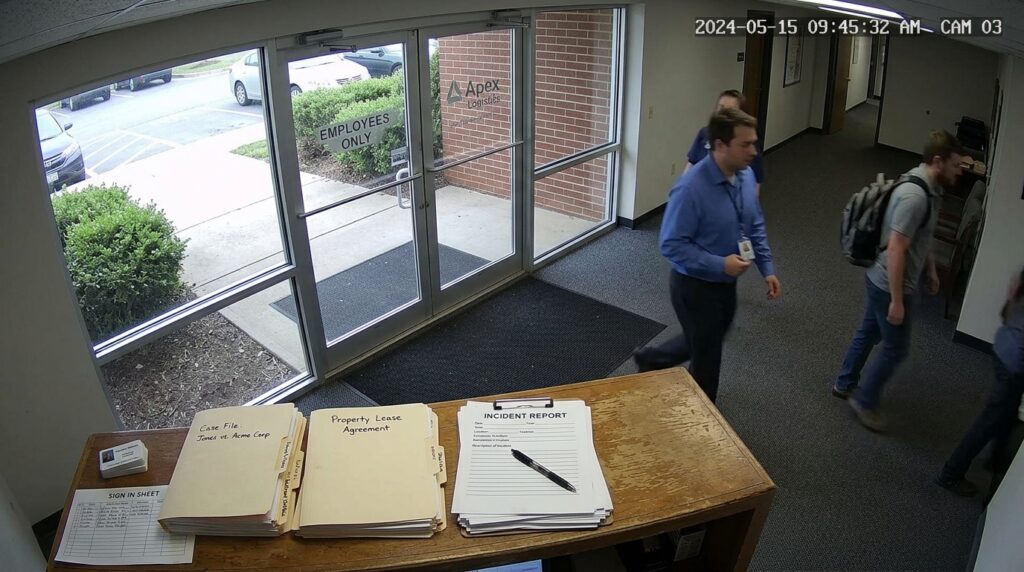
Workplace violence wrongful death claims may arise when an employee dies because of a fatal attack, shooting, robbery, assault, or preventable security failure at work. These cases often require a close review of prior threats, safety policies, staffing, police reports, and employer response.
Why Workplace Violence Death Claims Are Getting More Attention
Workplace violence is a serious occupational safety issue. It can affect employees in offices, hospitals, stores, schools, warehouses, transportation roles, public-facing jobs, and late-night work environments. The risk is not limited to one industry or one type of worker.
The CDC and NIOSH explain that workplace violence can include threats, verbal abuse, physical assaults, and fatal incidents directed at people at work or on duty. This makes workplace violence a legal and safety concern, not just a criminal matter.
When a fatal workplace attack occurs, the criminal case may focus on the attacker. A civil claim may examine a different question: whether someone had a duty to reduce a known risk and failed to act reasonably. That may include an employer, property owner, security contractor, staffing company, or another responsible party.
Suggested Image Placement 1: Workplace Entrance With Security Camera
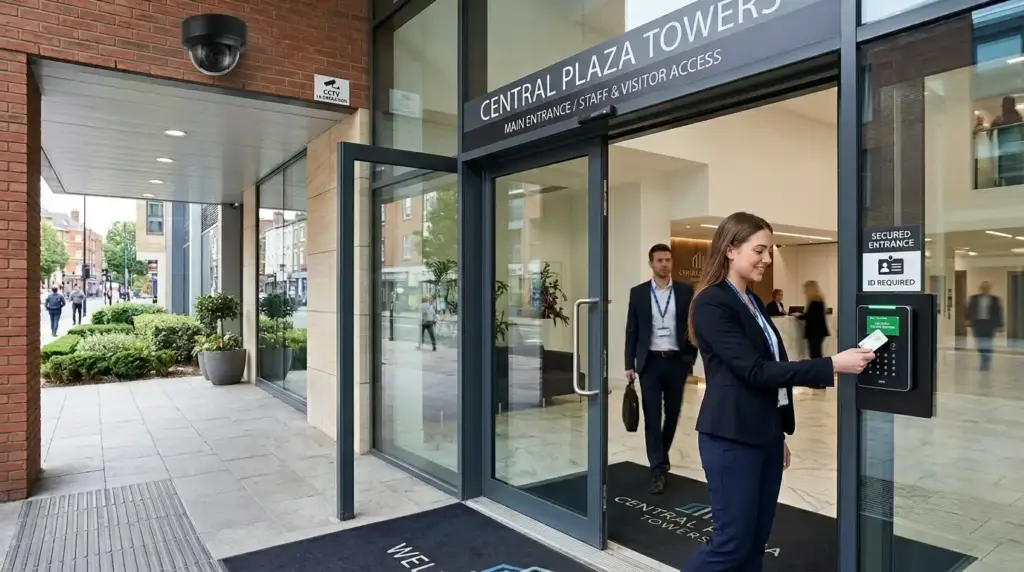
What Is A Workplace Violence Wrongful Death Claim?
A workplace violence wrongful death claim involves a fatal act of violence connected to the victim’s job. The incident may involve a customer, patient, coworker, former employee, contractor, visitor, robber, or unknown third party.
These claims can arise from several situations, such as a fatal shooting at a store, a deadly patient assault in a healthcare facility, a robbery at a gas station, an attack in a parking lot, a targeted coworker assault, or a fatal incident involving a delivery driver. Each case depends on the facts, the location, the history of prior threats, and the safety measures in place.
Families can review this broader resource on wrongful death claims to understand the general legal foundation behind these cases.
When Employers May Be Questioned After A Fatal Workplace Attack
An employer may face legal questions if there were warning signs before the fatal incident. These warning signs may include prior threats, previous assaults, repeated security complaints, unsafe staffing levels, ignored customer behavior, poor lighting, broken locks, or failure to follow workplace violence prevention policies.
Not every violent act creates employer liability. However, the employer’s conduct may be reviewed if the attack was foreseeable or if reasonable safety steps were ignored. The issue often becomes whether the employer knew or should have known about a serious risk.
Examples Of Warning Signs
Warning signs may include written complaints about a threatening person, prior police calls, HR reports, restraining orders, aggressive customer records, coworker complaints, or repeated safety incidents at the same location. If these records existed before the death, they may become central evidence.
Some workplaces also have written violence prevention policies. If a company had a policy but failed to follow it, that gap may become important during a legal review.
Possible Legal Theories In Fatal Workplace Violence Cases
Workplace violence claims can involve several legal theories. The right theory depends on who caused the harm, where it happened, and who had control over the premises or employee safety practices.
Common legal theories may include:
- Negligent security
- Negligent hiring or retention
- Failure to respond to known threats
- Premises liability
- Failure to train staff on workplace violence risks
- Failure to provide adequate staffing
- Failure to repair locks, lights, alarms, or access controls
These theories may overlap with other personal injury topics. For example, unsafe property conditions may connect to premises liability concerns. Readers can visit the guide on slip and fall accident claims for a broader look at property safety issues.
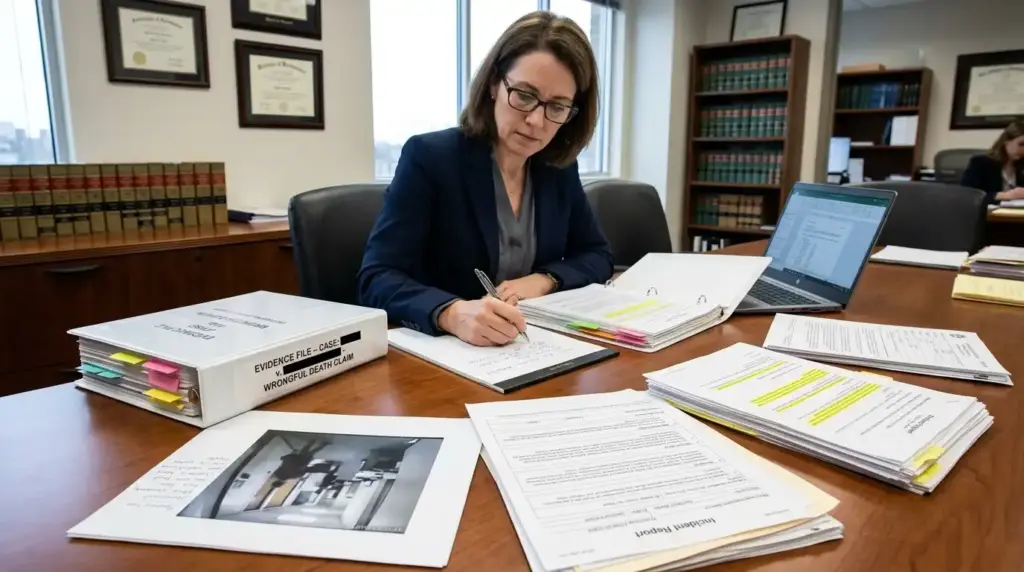
Suggested Image Placement 2: Lawyer Reviewing Incident Reports
Industries With Higher Workplace Violence Concerns
Workplace violence can happen anywhere, but certain jobs carry higher exposure because workers interact with the public, handle money, work alone, provide healthcare, enforce rules, transport passengers, or work during late hours.
Higher-risk settings may include healthcare facilities, convenience stores, gas stations, restaurants, hotels, public transportation, delivery work, security services, social services, and retail locations. In some cases, workers may have repeatedly raised concerns before the fatal incident.
The Bureau of Labor Statistics tracks fatal occupational injury data, including workplace deaths by event, exposure, occupation, and industry. These records can help show broader patterns, though each wrongful death case still depends on the specific facts.
Key Evidence After A Workplace Violence Death
Evidence in workplace violence wrongful death claims can come from many places. The family may need employment records, police documents, internal complaints, safety policies, video footage, witness statements, and building access records. Some evidence may be controlled by the employer or property owner, so early preservation can matter.
Important evidence may include:
- Police reports and incident numbers
- 911 call records
- Security camera footage
- Access card logs
- Prior complaint records
- HR files related to threats or harassment
- Workplace violence prevention policies
- Training records
- Staffing schedules
- Lighting, lock, and alarm maintenance records
- Witness statements from coworkers or customers
Online evidence may also matter. Threatening messages, tagged posts, location posts, and private communications may help show a pattern before the incident. For more context, see this article on social media and injury cases.
Digital Evidence Can Help Rebuild The Timeline
Phone records, texts, workplace apps, emails, badge logs, and surveillance clips may help show what happened before, during, and after the attack. These records can answer important questions, such as when supervisors learned about the threat, whether security was called, and whether the worker was placed in a dangerous situation.
Workers’ Compensation And Civil Claims After Workplace Violence
A fatal workplace violence incident may involve workers’ compensation death benefits if the death happened in the course of employment. These benefits may apply even when the attacker was a customer, patient, coworker, or stranger.
A separate civil claim may be possible if a third party contributed to the fatal incident. For example, a property owner may have ignored dangerous security problems. A security contractor may have failed to perform assigned duties. A staffing company may have ignored known risks. A coworker or former employee may have had a documented history of threats that was not addressed.
This distinction matters because workers’ compensation and wrongful death claims do not always cover the same damages, follow the same process, or involve the same responsible parties. A careful review can help families understand which legal path may apply.
Questions Families May Ask After A Fatal Workplace Attack
Families often have many questions after a violent workplace death. They may want to know whether the employer had prior notice, whether police had been called before, whether the attacker had a known history, and whether the worker had asked for help.
Useful questions may include:
- Were there prior threats or complaints?
- Did the employer know about the risk?
- Were there security cameras, alarms, or guards?
- Was the worker alone during a high-risk shift?
- Were locks, lights, or access systems broken?
- Did the company follow its own safety policies?
- Did a third party control the dangerous property condition?
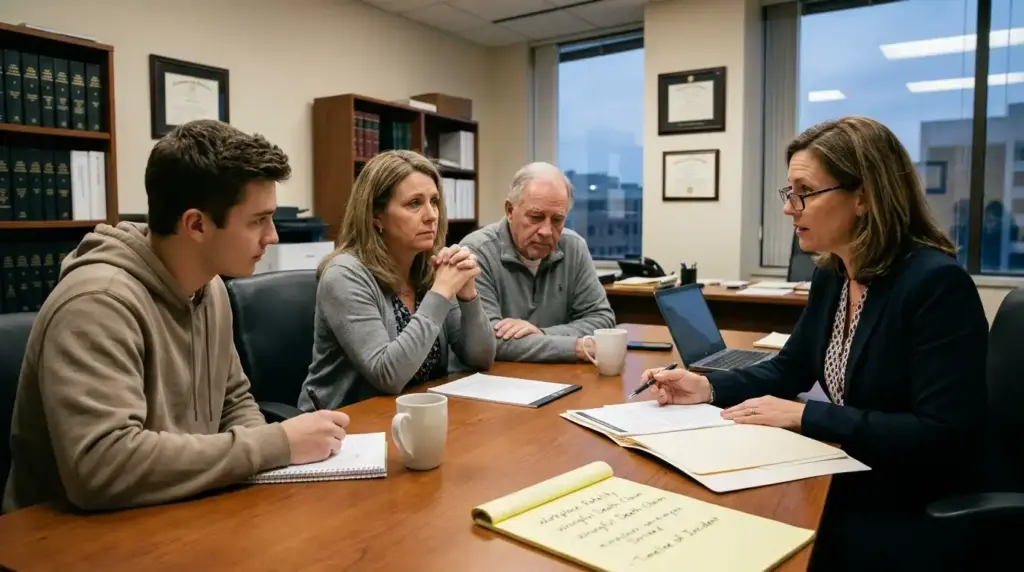
Suggested Image Placement 3: Family Legal Consultation After Workplace Violence
Final Thoughts
Workplace violence wrongful death claims require both emotional sensitivity and detailed investigation. These cases may involve criminal records, employment documents, prior complaints, workplace safety policies, security footage, and third-party responsibility.
Families may need to look beyond the attacker and examine whether the fatal incident was preventable. If warning signs were ignored or safety measures failed, a civil claim may help provide accountability. For additional legal trend context, read The Biggest Personal Injury Claim Trends in 2025.